


Embracing Life: Understanding by Emeka Obi Anyiam
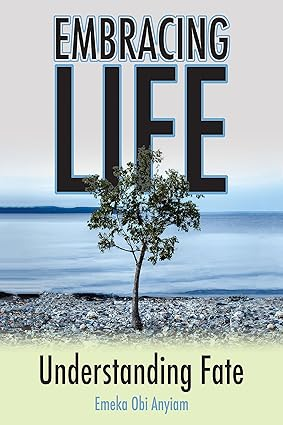
Genre: Personal development with philosophical and reflective themes
Length: ~110 pages
Star Rating: ★★★★★ (5/5)
Introduction
A story of an emotionally 'constipated' soldier, Lieutenant Daniel Hoyer, who has major trust issues with women altogether—but still falls hard for a new recruit, and he can’t hold back.
Even though she’s his subordinate, he wants her close—the closer, the better—even if her origins risk his entire mission. Set in the ruined, post-apocalyptic world known as the Outside, where rival factions fight for control of what remains, this is a character-driven dystopian romance within a surviving military order. Hoyer is sent to the Ridgelands to establish a fort and monitor the remnants of old-world weapons of mass destruction—but the one thing he can’t control might be the one thing that breaks him.
Review
This is a book that begins quietly. There is no rush to pull you in with drama or urgency. Instead, it asks you to slow down and consider something much larger than everyday concerns. The tone is reflective, almost meditative, as though the author is thinking out loud and inviting you to sit with those thoughts rather than react to them.
At its heart, the book is about the relationship between life and fate. Not in a heavy or overwhelming way, but in a way that feels thoughtful and searching. The author is trying to make sense of how much of life is chosen and how much is already shaped for us. This question runs gently through the book, never forced, but always present.
What stands out is the sincerity. The writing does not feel polished in a way that distances you. It feels direct, sometimes simple, but always intentional. There is a sense that the author is less concerned with sounding impressive and more focused on being understood. That gives the book a certain honesty that is easy to sit with.
At the same time, there are moments where you may find yourself wanting a little more depth or clarity. Some ideas are introduced and then moved past quite quickly, as though the author prefers to keep things open rather than fully unpack them. For some readers, this will feel freeing. For others, it may feel like something important is left unfinished.
There is also a calm acceptance that runs through the book. It does not push you to control everything or chase constant change. Instead, it leans toward understanding, patience, and a kind of quiet awareness. This makes it feel different from many modern self development books, which often focus on action and results. Here, the focus is more on perspective.
By the end, the book does not try to give you a clear answer about fate or life. It leaves space. Space to think, to question, and to interpret things in your own way. It feels less like a guide and more like a companion in thought.
Overall, this is a gentle, reflective read. It is best approached slowly, without expectation, allowing the ideas to settle in their own time. It may not give you immediate clarity, but it will leave you thinking, and sometimes that is far more valuable.


Comments